LVL建筑材料解析
LVL (Laminated Veneer Lumber): The Future of Modern Building Materials Understanding the Importance of LVL (Laminated Veneer Lumber) in Modern Architecture
In the modern field of architecture, material selection directly impacts building safety, durability, and cost control. As an important representative of engineered wood products, LVL (Laminated Veneer Lumber) stands out with its excellent performance, gradually replacing traditional solid wood beams and becoming the preferred material for residential, commercial, and industrial buildings.
Products like those provided by Fuqing represent engineering wood solutions that offer stable, reliable, high-performance structural materials that meet contemporary architectural needs. By applying engineered wood wisely, modern construction projects can achieve higher structural efficiency, better sustainability, and longer service life.
What is LVL Building Material?
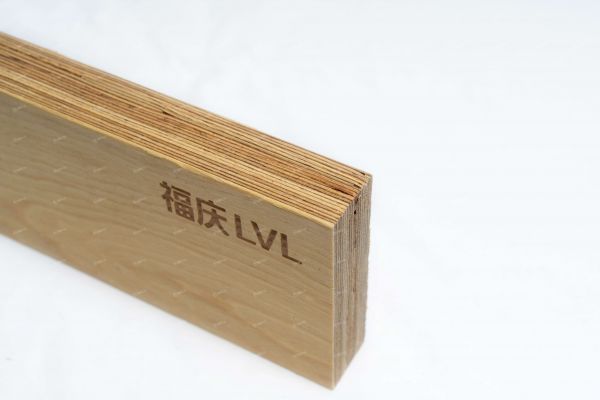
LVL is an engineered wood product made by bonding multiple thin wood veneers together under heat and pressure. Its unique feature is that all veneer grain is aligned with the length of the component, eliminating natural wood defects like knots and cracks, and significantly enhancing material strength and stiffness, providing a stable and reliable performance guarantee for structural design.
The Precision Manufacturing Process of LVL
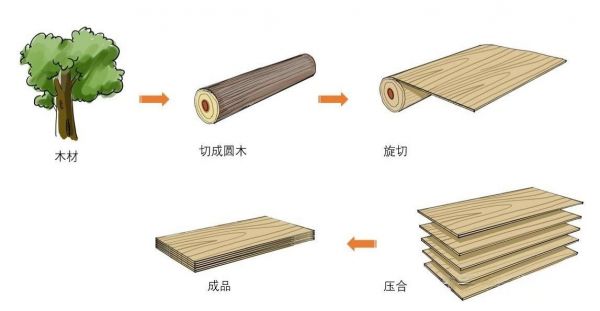
The production of LVL requires strict process control: selected fast-growing wood logs are sliced into 2-4mm thin veneers, dried to standard moisture content, and then sorted by grade. Each layer is evenly coated with high-performance structural adhesives like phenolic resin, and the panels are laid up with the grain aligned. After curing under high temperature and pressure, the material is precision machined and quality inspected. This standardized process ensures consistent strength and stable performance across different batches.
Five Core Performance Advantages
Excellent Mechanical Properties: The directional structure of LVL provides excellent bending, tensile, and compressive strength, making it particularly suitable for load-bearing beams, lintels, and other critical components. Strong Dimensional Stability: Compared to solid wood, LVL experiences minimal warping, shrinkage, and maintains structural stability under temperature and humidity changes. Controllable Engineering Design: Standardized production ensures precise and reliable mechanical property data, allowing designers to calculate directly according to specifications. Efficient Resource Utilization: Using thin veneers and fast-growing wood reduces dependence on large-diameter logs, aligning with sustainable development principles. Good System Compatibility: LVL can be perfectly matched with other engineered wood products like I-joists and structural plywood to construct complete systems for floors, walls, and roofs.Typical Application Scenarios in Architecture
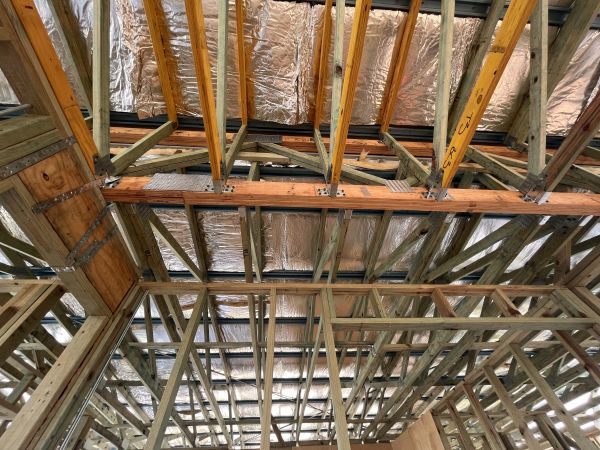
In actual engineering projects, LVL demonstrates wide applicability: as main load-bearing beams for floors and roofs, it enables larger span designs; used for large-size window lintels, it can safely transfer loads; as girders and side beams to ensure the stability of the floor system; in roof structures, it bears trusses, ridge beams, and other key load-bearing components; and it can also be processed into columns to provide straight and reliable vertical support for multi-story buildings.
Performance Comparison with Traditional Solid Wood
Comparison Project LVL Solid Wood Strength Consistency High Fluctuates greatly due to knots and grain Dimensional Stability Excellent Prone to warping and cracking Span Capacity Breaks through limitations of solid wood Restricted by natural size Defect Control Factory production with minimal defects Natural defects are uncontrollable Sustainability Efficient use of wood resources Consumes large-diameter logsCollaborative Application in Modern Engineering Wood Systems
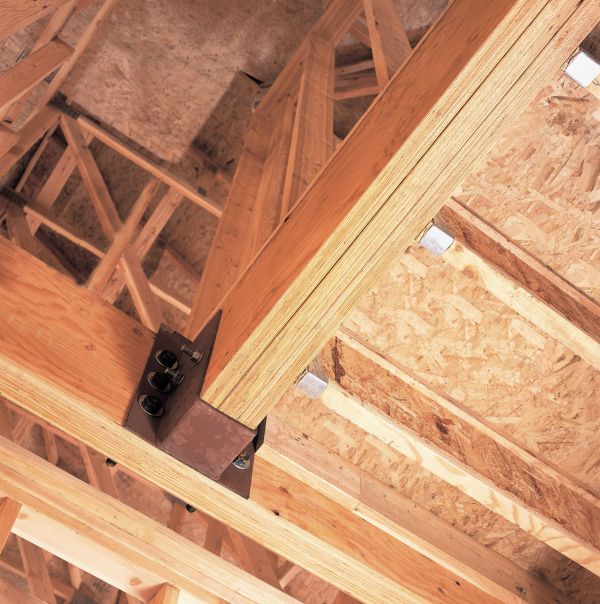
When used in conjunction with other engineered wood products, LVL maximizes structural efficiency: paired with I-joists to form lightweight, large-span floor systems; complementing structural plywood to enhance the integrity of walls and floors; and in high-end projects, combining with glue-laminated timber to balance structural performance and architectural aesthetics.
Practical Recommendations for Choosing LVL
When designing, select the appropriate grade section based on span and load requirements, and take protective measures in high-moisture environments. Pay attention to the collaborative design of the floor system, using the manufacturer's recommended connectors and fastening methods to avoid damaging the material structure. For example, Fuqing's LVL products offer E10-E16 structural grade series, supporting a variety of wood species like radiata pine and larch, with lengths up to 12 meters to reduce joints, and precise moisture content control to ensure stability after installation.
As an important component of modern wood structural systems, LVL is driving the innovative development of green buildings with its engineered performance, resource efficiency, and design flexibility. Choosing internationally standardized LVL products like those from Fuqing not only meets structural safety requirements but also helps achieve sustainable building goals, providing an efficient and reliable material choice for modern architecture.
相关知识
LVL建筑材料解析
什么是LVL建筑材料?
福庆LVL亮相第125届广交会现场盛况空前
现场火热!福庆LVL广交会首日开门红
新年首秀!DUBAI WOODSHOW首日,福庆LVL惊艳出圈
【品质核心】福庆LVL如何打造高品质多层板?
以“质”谋远|Sydney Build Expo收官,福庆LVL步履不停!
创领行业革新!福庆LVL荣获“2023门墙柜产业-降本增效推动者”
高能预告!LVL技术发展峰会暨福庆木业ENF新品发布会即将华丽启幕
福庆LVL引领行业革命:创新研发ENF级纤维改性树脂胶黏剂,打造无醛健康家居新时代
网址: LVL建筑材料解析 http://m.fulushijia.com/zhidaoview22729.html